One could almost call the expression “thermal welding” a pleonasm, since welding is always the result of heating materials of the same nature in order to join them together. Nevertheless, “thermal” is a generic term for a wide range of welding technologies: arc, MIG-TIG, plasma, laser, high-frequency, resistance, ultrasonic… These welding technologies differ in their energy sources, preheating temperatures, maximum temperatures reached, welding speeds, advancement rates and cooling rates.
Welding can be defined as a process for joining parts of the same material (metals, plastics, wood, etc.) by heating. Welding, on the other hand, is the result of this process and corresponds to the creation of a bond between the above-mentioned elements. It is obtained either by adding material from the outside, or by fusing the edges of the parts in contact. In theoretical terms (materials science), welding corresponds to a highly localized modification of the atomic structure of the parts thus assembled.
In practice, these two terms are often used interchangeably to designate both the joining process and the resulting bond. Although very frequent, the use of the words “welding” in the field of metalworking and “welds” in the fields of plastics processing and plastic packaging corresponds more to habitual usage than to different realities.
This process is based on the interaction between an electron beam with a power of between 10 kW and 100 kW, and thick metal parts (order of magnitude up to 200 to 300 millimeters) to be assembled. The high-speed projection of electrons creates strong kinetic energy directed towards the edges of the two elements to be welded. This energy is the source of very high heat, leading to fusion and joining. This also translates into a very high welding speed, which limits deformation of the parts to be joined.
Given the stringent technical constraints involved in generating a high-power electron beam in a vacuum chamber, beam welding operations are automated. This technology can be used to weld ferrous metals (steel, cast iron, etc.) and non-ferrous metals (aluminum, copper, lead, zinc, tin, nickel, chromium, etc.), refractory metals (niobium, rhenium, etc.) and “super alloys” (tantalum, titanium, molybdenum, etc.).
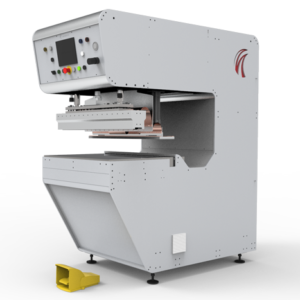
This process assembles thermoplastic layers using a high-frequency electromagnetic field (27.12 MHz). In fact, a generator creates a powerful electric current that is diffused by one or more electrodes through the material to be joined. The electromagnetic field thus created activates the molecules in the area concerned, resulting in the softening of the surfaces to be welded.
As there is no physical contact with the material, high frequency ensures instantaneous fusion of the contact zones of the parts to be assembled, in the form of a bond that is both clean and solid. This process is mainly used for assembling high-melting polymers: polyamide (PA), polycarbonate (PC), thermoplastic polyester (PETP), polyethylene terephthalate (PET), polyvinyl chloride (PVC), polyether ether ketone (PEEK)…
The assembly of PVC sheets is used in particular in the fields of leather goods (wallets, pouches…), advertising objects (cases, displays, suitcases…), stationery (diaries, binders…) or telecommunications (cell phone covers…).
This thermal welding process enables hot-melt plastic parts to be joined using an electric current at a frequency of 20 to 70 kHz, with vibration amplitudes of the order of magnitude of 10 to 120 μm. An electromagnetic transducer or converter generates high-frequency waves which are transmitted by a welding head (sonotrode) to the parts to be assembled. Ultrasound agitates the molecules in the contact zones, and the thermal characteristics of the material cause heating from the center to the edge of the material.
Ultrasonic welding is characterized by a constant rate of progress, enabling the two thermoplastic parts to be bonded very quickly, in the form of a smooth, clean welding surface. This technology is mainly used for assembling polymers with relatively low melting temperatures, such as polystyrene (PS), polymethyl methacrylate (PMM), polyethylene (PE), polypropylene (PP) or acrylonitrile butadiene styrene (ABS).
Despite its name, this is not strictly speaking a technology for joining plastics by welding, as it is not based on the use of energy sources, and has neither preheating nor tempering temperatures. Cold welding is a bonding technique used to join parts or components made of rigid plastics (PVC, PMMA, PP…) using mastic or epoxy resin. Pasty or liquid in nature, these adhesives are reinforced with suspended fibers or particles to ensure bonding strength.
Cold welding is mainly used for repairing plastic parts and components, as well as for assembling pipes and tubes in the construction and civil engineering sectors.